Introduction
In today’s rapidly evolving digital environment, new concepts, technologies, and innovations emerge frequently. One such term gaining attention is hggbfe3fykc. While many people are unfamiliar with its meaning and practical applications, understanding its role can provide valuable insights into modern technological developments and digital transformation strategies.
The growing importance of digital systems has increased the need for efficient, scalable, and innovative solutions. As organizations seek better performance, improved user experiences, and enhanced operational efficiency, concepts like hggbfe3fykc become increasingly relevant.
This comprehensive guide explores the various aspects of hggbfe3fykc, including its core features, benefits, applications, challenges, industry impact, and future developments. Whether you are a business professional, technology enthusiast, student, or researcher, this article provides detailed information to help you better understand the subject and its significance in today’s digital landscape.
Understanding the Core Concept
The foundation of any successful technology or framework lies in its underlying principles. Understanding the basic concept behind hggbfe3fykc is essential for appreciating its broader applications and value.
At its core, this concept focuses on improving efficiency, streamlining processes, and enhancing overall system performance. It serves as a framework that enables organizations and individuals to achieve better outcomes through optimized workflows and innovative solutions.
Many modern systems require flexibility and adaptability to meet changing market demands. This approach helps users maintain competitiveness while ensuring long-term sustainability. The ability to integrate with existing infrastructures makes it particularly attractive for businesses looking to modernize operations without significant disruption.
Additionally, the concept supports data-driven decision-making by facilitating better information management and analysis. As organizations generate increasing amounts of data, solutions that improve accessibility and usability become more valuable.
Understanding these fundamentals provides a strong foundation for exploring more advanced aspects, including practical implementations and strategic benefits.
Key Features and Capabilities
One of the primary reasons for the growing interest in this area is its extensive range of features and capabilities. These characteristics contribute significantly to its effectiveness and widespread adoption.
A major feature is scalability. Systems built around this approach can easily adapt to changing requirements, making them suitable for organizations of various sizes. Whether supporting small businesses or large enterprises, scalability ensures consistent performance.
Another important capability is automation. Automating repetitive tasks reduces manual effort, minimizes errors, and improves productivity. Organizations can allocate resources more effectively while focusing on higher-value activities.
Security also plays a critical role. Modern digital environments face numerous threats, making robust protection mechanisms essential. Advanced security measures help safeguard sensitive information and maintain user trust.
Integration capabilities further enhance functionality. Seamless compatibility with existing tools and platforms simplifies implementation and accelerates adoption. This reduces operational disruptions and lowers transition costs.
User-friendly interfaces contribute to accessibility, enabling users with varying technical expertise to utilize the system effectively. Combined with analytics and reporting tools, these features create a comprehensive solution that supports both operational efficiency and strategic planning.
Advantages for Businesses and Individuals
The benefits associated with this approach extend across multiple sectors and user groups. Both organizations and individuals can gain substantial value from its implementation.
For businesses, improved efficiency is often the most immediate advantage. Streamlined processes reduce operational bottlenecks, allowing teams to complete tasks more quickly and accurately. Increased productivity often translates into cost savings and improved profitability.
Enhanced decision-making is another significant benefit. Access to reliable data and actionable insights enables leaders to make informed strategic choices. This can improve resource allocation, customer satisfaction, and overall business performance.
Individuals also benefit from greater convenience and accessibility. Simplified workflows reduce complexity, making it easier to achieve goals and manage responsibilities effectively.
Flexibility remains a key advantage. Users can adapt the system to meet specific requirements, ensuring relevance across diverse applications and industries.
Long-term sustainability is equally important. Organizations that invest in innovative solutions are often better positioned to respond to future challenges and opportunities. By embracing modern technologies and methodologies, users can maintain competitiveness in an increasingly dynamic marketplace.
Common Applications Across Industries
The versatility of this concept has led to adoption across a wide range of industries. Different sectors utilize its capabilities to address unique challenges and improve performance.
In healthcare, it can support better data management, operational efficiency, and patient care. Improved information accessibility helps medical professionals make more informed decisions and enhance treatment outcomes.
The education sector benefits through improved learning management systems, digital collaboration tools, and streamlined administrative processes. Students and educators gain access to more efficient and engaging learning environments.
Financial institutions leverage similar approaches to strengthen security, improve customer experiences, and optimize transaction processing. Enhanced reliability and accuracy contribute to greater trust and operational effectiveness.
Manufacturing organizations use advanced systems to improve production planning, inventory management, and quality control. These improvements can significantly reduce costs while increasing output.
Retail businesses benefit from enhanced customer insights, inventory optimization, and personalized experiences. Better data analysis enables companies to understand consumer behavior and respond effectively to market trends.
These examples highlight the broad applicability and value that such frameworks can provide across diverse industries.
Challenges and Considerations
Despite its many advantages, implementation is not without challenges. Organizations must carefully evaluate various factors before adoption.
One common challenge involves initial investment requirements. Depending on the scope of implementation, costs related to infrastructure, training, and integration may be significant. Proper planning is essential to ensure a positive return on investment.
Change management represents another important consideration. Employees may require training and support to adapt to new systems and workflows. Effective communication and leadership can help minimize resistance and encourage successful adoption.
Data security and privacy concerns must also be addressed. Organizations should implement strong governance policies and compliance measures to protect sensitive information.
Technical complexity may present difficulties, particularly for organizations with limited expertise. Partnering with experienced professionals can help overcome implementation obstacles and maximize benefits.
Performance monitoring is equally important. Regular evaluation ensures that objectives are being met and identifies opportunities for further optimization. By proactively addressing challenges, organizations can improve implementation outcomes and achieve sustainable success.
Impact on Digital Transformation
Digital transformation has become a strategic priority for organizations worldwide. Innovative frameworks and technologies play a critical role in supporting this transition.
By enabling greater efficiency and automation, modern solutions help organizations modernize operations and improve customer experiences. They facilitate the integration of digital tools into everyday processes, creating more agile and responsive business environments.
Data-driven strategies have become increasingly important in competitive markets. Enhanced analytics capabilities allow organizations to identify trends, measure performance, and make informed decisions. This contributes to improved operational effectiveness and long-term growth.
Customer expectations continue to evolve. Businesses must deliver seamless experiences across multiple channels while maintaining high levels of reliability and security. Digital transformation initiatives help organizations meet these demands effectively.
Innovation also accelerates through improved collaboration and knowledge sharing. Teams can access information more easily, work together more efficiently, and develop creative solutions to complex challenges.
As digital transformation continues to reshape industries, frameworks like hggbfe3fykc are expected to remain important contributors to organizational success.
Future Outlook and Emerging Trends
The future of this field appears highly promising as technological advancements continue to accelerate. Emerging trends suggest increasing adoption and expanded capabilities across multiple sectors.
Artificial intelligence and machine learning are expected to play significant roles in future developments. These technologies can enhance automation, improve predictive analytics, and support more sophisticated decision-making processes.
Cloud computing will likely continue driving scalability and accessibility. Organizations can leverage flexible infrastructure to support growth while reducing operational complexity.
Cybersecurity innovations will remain essential as digital ecosystems expand. Enhanced protection mechanisms will help organizations address evolving threats and maintain user confidence.
Sustainability is another emerging focus area. Businesses increasingly seek environmentally responsible solutions that reduce resource consumption and support long-term resilience.
The integration of advanced analytics, automation, and intelligent systems is expected to create new opportunities for innovation and growth. As adoption expands, organizations that embrace these trends may gain significant competitive advantages.
Comparison Table
| Aspect | Traditional Methods | Modern Approach |
|---|---|---|
| Efficiency | Moderate | High |
| Scalability | Limited | Excellent |
| Automation | Minimal | Advanced |
| Security | Basic | Enhanced |
| Integration | Difficult | Seamless |
| Cost Efficiency | Variable | Improved Long-Term |
| Data Analysis | Manual | Automated |
| User Experience | Average | Optimized |
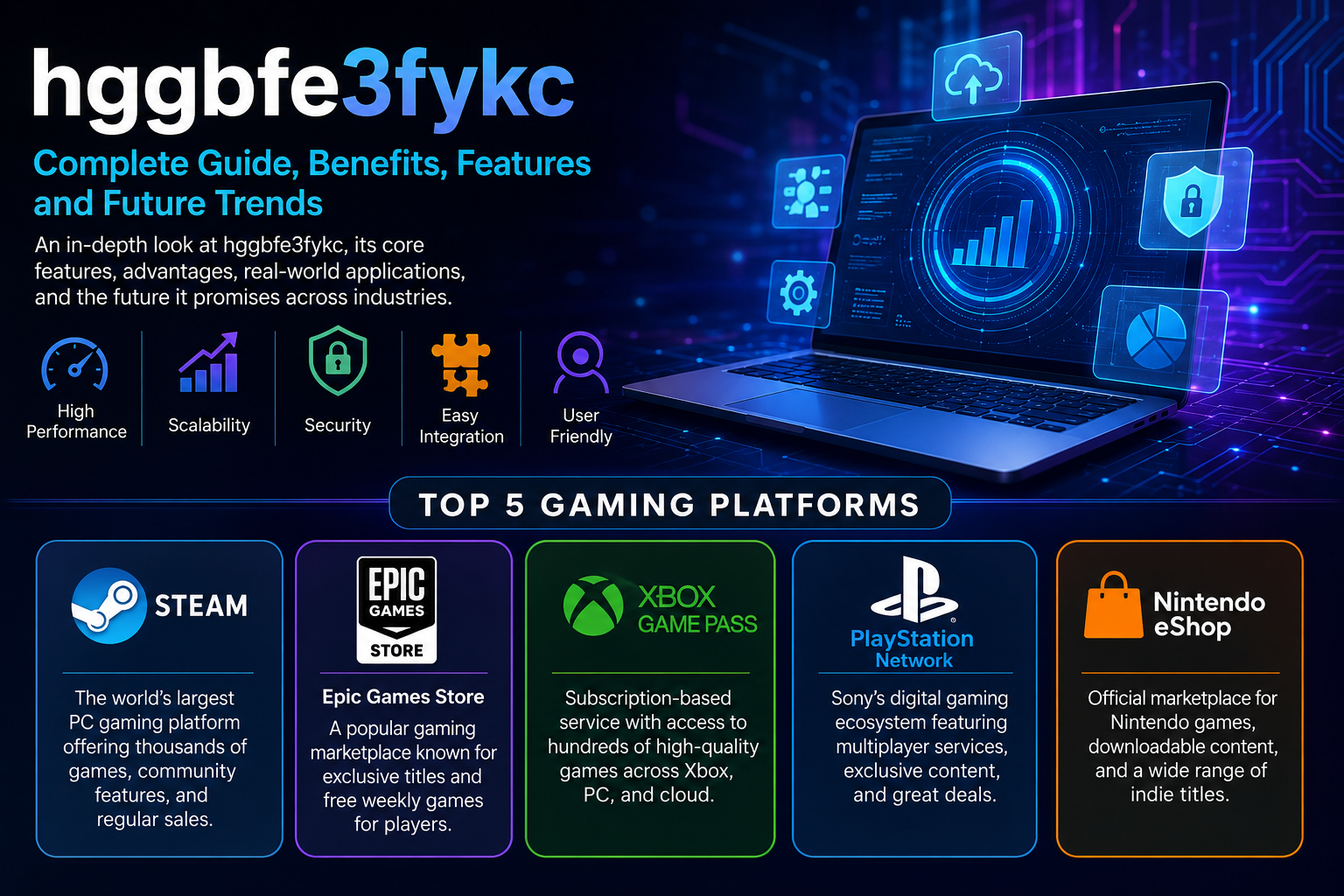
Top 5 Gaming Platforms
| Gaming Platform | Description |
| Steam | The world’s largest PC gaming platform with thousands of games, community features, and regular sales. |
| Epic Games Store | Popular gaming marketplace known for exclusive titles and free weekly games. |
| Xbox Game Pass | Subscription-based gaming service offering access to hundreds of high-quality games. |
| PlayStation Network | Sony’s digital gaming ecosystem featuring multiplayer services and exclusive content. |
| Nintendo eShop | Official marketplace for Nintendo games, downloadable content, and indie titles. |
FAQs
What is hggbfe3fykc?
It is a concept or framework that focuses on improving efficiency, scalability, and digital performance across various applications.
Why is it important?
It helps organizations optimize operations, improve decision-making, and support digital transformation initiatives.
Which industries can benefit from it?
Healthcare, education, finance, manufacturing, retail, and many other sectors can benefit from its implementation.
What are the main advantages?
Key benefits include automation, scalability, enhanced security, improved efficiency, and better data management.
What does the future look like?
Future developments are expected to include AI integration, cloud expansion, advanced analytics, and stronger cybersecurity capabilities.
Conclusion
As technology continues to evolve, understanding innovative concepts such as hggbfe3fykc becomes increasingly important. Its ability to improve efficiency, support scalability, enhance security, and drive digital transformation makes it a valuable component of modern business strategies. By carefully evaluating its features, benefits, applications, and future trends, organizations and individuals can make informed decisions and position themselves for long-term success in an increasingly digital world.